
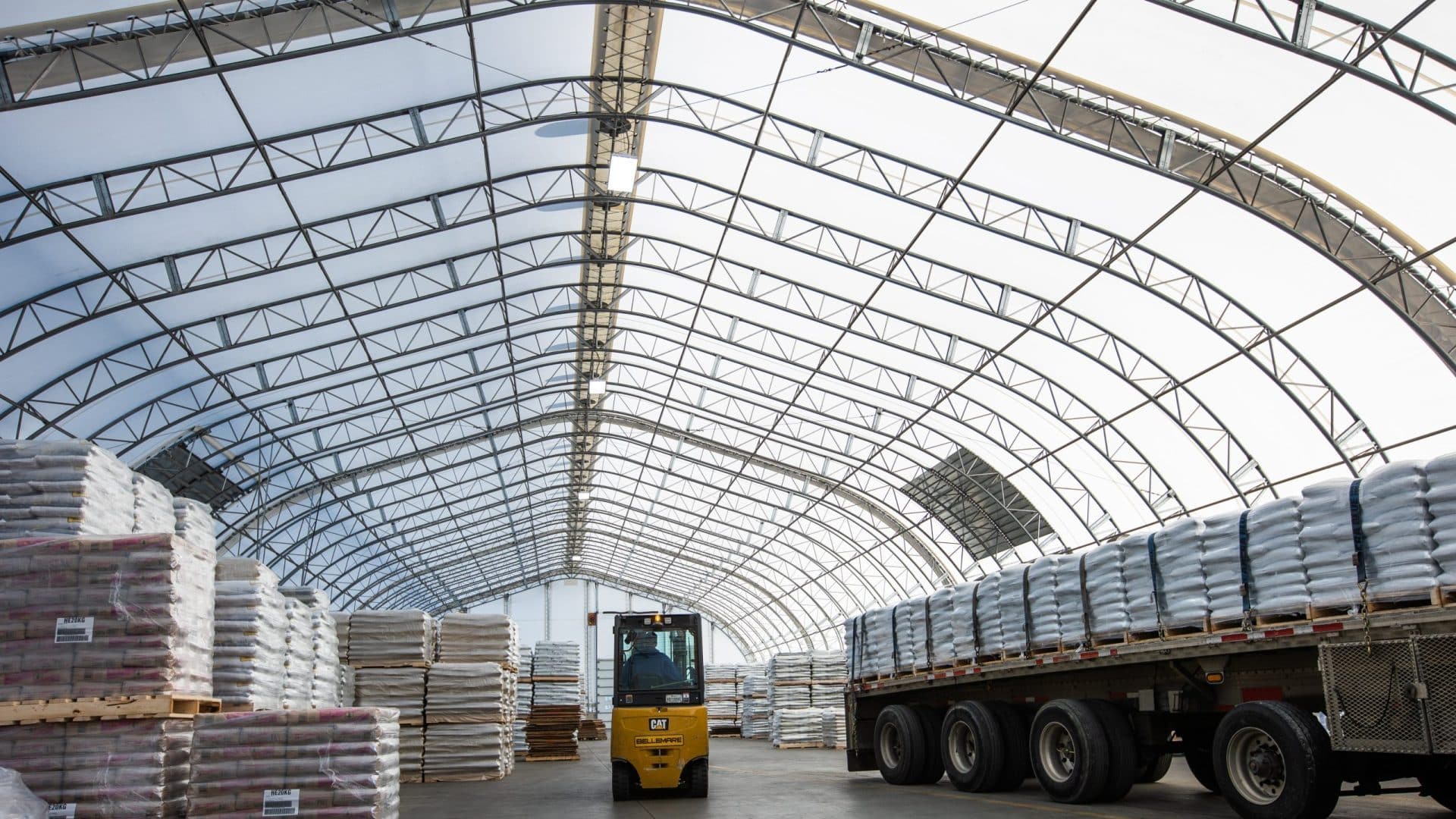
When your operation needs additional covered space, whether for storage, equipment protection, or production overflow, fabric buildings have become one of the most practical options available. They go up faster than conventional structures, cost less per square foot, and can be engineered to handle serious loads and climate conditions. But the quality gap between manufacturers is significant, and choosing the wrong one can mean years of headaches.
Here’s what industrial buyers should actually look at before signing a contract.
Engineering credentials matter more than the brochure
The fabric building industry has no shortage of suppliers happy to ship you a kit and wish you luck. What separates serious engineered fabric buildings from commodity tent structures is documented engineering: stamped drawings, load calculations, compliance with local building codes, and wind/snow ratings appropriate for your region.
Ask every manufacturer upfront: are your structures engineer-stamped and permit-ready? A reputable fabric building manufacturer will say yes without hesitation. If the answer involves vague language about “most jurisdictions” or “depending on your use case,” walk away.
North American manufacturing vs. offshore sourcing
This distinction gets glossed over in a lot of buyer conversations, but it matters operationally. Manufacturers who produce domestically or in Canada typically offer faster lead times, easier warranty claims, better availability of replacement parts, and sales teams who understand local permitting requirements.
Companies like MegaDome Buildings, a Canadian fabric building manufacturer with decades of experience across agricultural, industrial, and commercial applications, build their structures in North America and support customers through the full project lifecycle, from site assessment to installation. That kind of integrated service is hard to replicate when you’re dealing with an overseas supplier filtered through a middleman distributor.
Evaluate the full product range, not just the flagship model
A manufacturer that only offers one structure type is asking you to fit your needs to their product. Strong fabric building manufacturers offer a range of configurations: clear-span options, modular designs, insulated versions for climate-sensitive operations, and sector-specific solutions for agriculture, mining, military, or public works.
This flexibility signals engineering depth. If a company can build a fabric livestock building, a salt storage dome, and a vehicle maintenance facility under the same roof program, they’ve solved real-world problems across many operating contexts. That experience translates into better product design and fewer surprises on your project.
Commercial fabric buildings: what the cost conversation really looks like
Buyers often come into the process focused on upfront price per square foot. That’s understandable, but it’s an incomplete frame. The real commercial fabric building cost calculation includes foundation requirements, installation complexity, expected membrane lifespan, and long-term maintenance.
A lower sticker price on a building with a 10-year membrane and limited warranty support is rarely a better deal than a higher-quality structure built to last 25 years with a manufacturer who still answers the phone on year 15. Ask about membrane material, UV resistance, and what the replacement cover process looks like, both logistically and in terms of cost.
References and installed base
Any manufacturer worth considering should be able to point you to a substantial installed base in your sector and geography. Ask for references from operations similar to yours. How was the installation experience? Were drawings and permits handled cleanly? How did the manufacturer respond when something needed adjustment?
Niche fabric building manufacturers with strong regional track records often outperform larger generalist suppliers on service quality, simply because their business depends on local reputation.
The bottom line
Fabric structures are a smart investment when you source them from a manufacturer who treats the project as an engineering problem, not a sales transaction. Prioritize engineering documentation, North American manufacturing capability, product range, and lifecycle cost over headline price.
The companies doing this well have built reputations on repeat business from industrial and agricultural operators who came back for a second and third structure. That’s the signal worth looking for.
For buyers evaluating fabric building manufacturers across Canada and the United States, MegaDome Buildings offers engineered solutions for agricultural, industrial, and commercial applications. Learn more at megadomebuildings.com.