
The classic Everest Base Camp Trek with Helicopter Return has long represented one of the world’s most iconic mountain journeys, drawing thousands of adventurers annually to follow in the footsteps of legendary mountaineers. However, a revolutionary approach has emerged that combines the best of both worlds: the Everest Base Camp Trek with Helicopter Return. This hybrid adventure allows trekkers to experience the gradual acclimatization, cultural immersion, and physical challenge of trekking to base camp while eliminating the lengthy descent by flying back to Kathmandu in spectacular style, transforming the traditional two-week commitment into a more time-efficient yet equally rewarding experience.
The Hybrid Concept: Best of Both Worlds
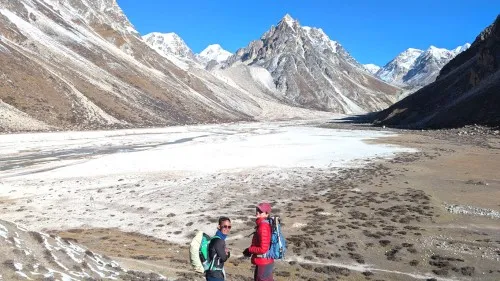
The Everest Base Camp Trek with Helicopter Return represents an intelligent compromise between traditional trekking and pure helicopter tours. By trekking upward to base camp over eight to ten days, participants gain the full physical and cultural experience that makes the EBC journey so transformative. The gradual ascent allows proper acclimatization to altitude, reduces risk of altitude sickness, and provides time to absorb the changing landscapes and interact meaningfully with Sherpa communities along the route.
The helicopter return leg eliminates the need for retracing your steps during the four to five days normally required to trek back from base camp to Lukla. This asymmetric approach acknowledges a truth many trekkers discover: while the ascent toward Everest builds anticipation and wonder with each day, the descent often feels anticlimactic, covering familiar terrain with tired legs and the psychological letdown that follows achieving a major goal. The helicopter flight transforms what could be a weary march into a triumphant aerial celebration of your accomplishment.
This format particularly appeals to time-conscious travelers who want the authentic trekking experience but cannot allocate two full weeks for a round-trip trek. Business professionals, those with limited vacation days, or travelers combining EBC with other Nepal destinations find that saving four days on the return makes the difference between an impossible dream and an achievable reality.
The Trekking Ascent: Traditional Route with Purpose
The journey to Everest Base Camp typically begins with a flight from Kathmandu to Lukla, followed by trekking that ascends gradually through the Khumbu Valley. The route passes through legendary Sherpa villages—Phakding, Namche Bazaar, Tengboche, Dingboche, and Lobuche—each offering unique perspectives on mountain life and progressively spectacular views of Himalayan giants.
The first days traverse lower elevations where rhododendron forests, suspension bridges spanning turquoise rivers, and terraced hillsides create a verdant landscape that contrasts dramatically with the stark beauty ahead. Namche Bazaar, the region’s commercial hub perched in a natural amphitheater, provides the first major acclimatization stop where trekkers typically spend an extra day hiking to nearby viewpoints or visiting the Sherpa Museum.
Beyond Namche, the trail enters higher alpine zones where vegetation thins and the presence of mountains becomes overwhelming. Tengboche Monastery offers spiritual enrichment alongside stunning panoramas of Ama Dablam, Everest, and Lhotse. The monastery’s morning prayer ceremonies allow trekkers to witness Buddhist traditions that have sustained this community for generations.
The final push from Lobuche to Gorak Shep and ultimately to Everest Base Camp at 5,364 meters tests physical and mental reserves. The altitude’s effects become pronounced—breathing requires conscious effort, simple tasks demand extended time, and the landscape’s harsh beauty reflects the extreme environment where human survival requires constant vigilance. Reaching base camp, seeing the Khumbu Icefall and the tents of mountaineering expeditions preparing for summit attempts, creates a profound sense of accomplishment that justifies every difficult step.
The Helicopter Return: Aerial Perspective on Your Achievement
After reaching Everest Base Camp and typically climbing to Kala Patthar (5,545 meters) for optimal Everest views, the Everest Base Camp Trek with Helicopter Return transitions to its aerial phase. The helicopter pickup usually occurs from Gorak Shep or sometimes Pheriche, depending on weather conditions and operator logistics. This timing allows trekkers to complete the essential high-altitude objectives while still benefiting from several days of acclimatization that reduce altitude sickness risk during the flight.
The helicopter flight retraces the trekking route from an entirely different perspective. Villages, monasteries, and trails you walked through over days now appear as miniature landscapes spread below. The vertical relief that took so much effort to climb becomes visually apparent when seen from above—ridges that required hours of steep climbing appear as mere wrinkles in the massive mountain geography.
The flight typically includes a stop at Lukla or sometimes at the Everest View Hotel for breakfast or refreshment. This break serves practical purposes—refueling, weight management for high-altitude performance—while providing opportunities for final photographs and reflection on the journey. The continuation to Kathmandu reveals the full geographic transition from high Himalayas through mid-hill regions to the Kathmandu Valley, compressing days of trekking into a 45-minute flight that showcases Nepal’s extraordinary vertical diversity.
Physical and Logistical Advantages
The Everest Base Camp Trek with Helicopter Return format delivers several practical benefits beyond time savings. Physical wear accumulates during long treks, particularly on knees and joints during extended descents. Eliminating four days of downhill hiking prevents the cumulative damage that can plague trekkers for weeks after returning home. Those with previous knee injuries or concerns about repetitive impact stress find this hybrid approach significantly reduces injury risk.
The psychological benefits also prove substantial. Maintaining motivation during descent after achieving your primary goal requires mental discipline that not everyone possesses, especially when fatigue, altitude effects, and weather challenges persist. The helicopter return allows you to leave the mountains on a high note—literally and figuratively—preserving the sense of achievement without the diminishment that sometimes accompanies the long walk out.
Logistically, the helicopter return provides insurance against flight delays from Lukla. Weather frequently disrupts the small planes serving Lukla’s challenging runway, sometimes stranding trekkers for days and causing missed international connections. Helicopters operate in slightly broader weather windows and offer more flexible scheduling, reducing (though not eliminating) delay risks significantly.
Cost Considerations and Value Proposition
The Everest Base Camp Trek with Helicopter Return costs more than standard round-trip trekking but less than a complete helicopter tour. Typical package prices range from $2,500 to $3,500 per person depending on service levels, group size, and season. This premium over traditional trekking (usually $1,200-1,800 for full packages) reflects helicopter operational costs, which remain substantial given the altitude, distance, and specialized equipment required.
Breaking down the cost differential helps contextualize the value: the helicopter return leg typically adds $800-1,200 to base trek costs, while saving four nights of accommodation and meals (worth approximately $150-200). The net premium of $600-1,000 purchases significant time savings, reduced physical stress, and the unique aerial perspective—value that most participants consider worthwhile given the once-in-a-lifetime nature of the journey.
Budget-conscious travelers can reduce costs by booking shared helicopter flights rather than private charters, by choosing basic teahouse accommodation throughout the trek, and by traveling during shoulder seasons when prices soften slightly. However, the fundamental cost structure remains elevated given the helicopter component’s inherent expenses.
Planning and Preparation Requirements
Preparing for the Everest Base Camp Trek with Helicopter Return requires the same physical conditioning as traditional EBC treks. The ascent follows the identical route, faces the same altitude challenges, and demands equivalent fitness levels. Training should begin at least eight weeks before departure, emphasizing cardiovascular endurance, leg strength, and hiking stamina with loaded packs.
Gear requirements mirror standard EBC trekking needs: quality sleeping bag, layered clothing system, waterproof shells, broken-in boots, and accessories like trekking poles, headlamp, and water purification. The helicopter return doesn’t reduce equipment needs since you’ll carry everything during the upward trek.
Timing remains crucial for optimal experience. The best seasons—October through November and March through May—offer stable weather for both trekking and helicopter operations. Booking several months in advance ensures availability, particularly during peak October when demand exceeds capacity for both teahouse beds and helicopter slots.
Conclusion
The Everest Base Camp Trek with Helicopter Return embodies the evolution of adventure travel toward experiences that honor tradition while embracing innovation. By preserving the essential trekking journey—the gradual ascent through Sherpa villages, the physical challenge of high altitude, the earned achievement of reaching base camp—this hybrid approach maintains authenticity and integrity that pure helicopter tours cannot match. Simultaneously, the aerial return acknowledges modern realities of limited time and offers perspectives that traditional trekking cannot provide.
This format democratizes Everest access for those whose schedules cannot accommodate two full weeks but who refuse to sacrifice the genuine trekking experience for convenient shortcuts. It represents intelligent design in adventure travel, recognizing that meaningful mountain journeys can incorporate different transportation modes without compromising their transformative power. For trekkers standing at Everest Base Camp knowing a helicopter awaits to whisk them back to Kathmandu, the experience delivers both traditional satisfaction and contemporary efficiency—proving that respecting the past while embracing the future creates the most rewarding path forward in Himalayan exploration.