
Introduction
Accurate financial records are essential for running a successful business. Whether a company manages a handful of transactions or thousands of payments each month, it needs a reliable system to organize financial information. A general ledger provides this foundation by recording and categorizing business transactions in one central accounting record.
Understanding how it works can help business owners monitor expenses, track income, and make informed financial decisions.
What Is a General Ledger?
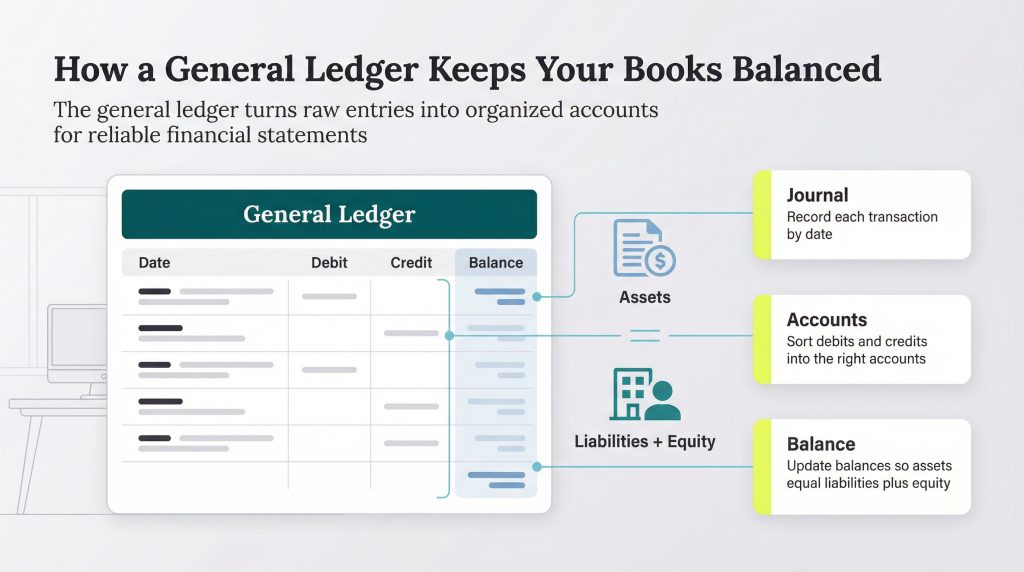
A general ledger is the main accounting record that summarizes a business’s financial transactions across different accounts. It includes information about income, expenses, assets, liabilities, and owner’s equity.
Each transaction is recorded using the double-entry accounting system, in which every transaction affects at least two accounts through corresponding debits and credits. This approach helps maintain balanced financial records and supports accurate reporting.
For example, when a business purchases office equipment using cash, the equipment account increases while the cash account decreases. Recording both sides of the transaction helps ensure that the financial records remain consistent.
What Does a General Ledger Include?
A general ledger contains several account categories that provide a comprehensive view of business finances.
1. Assets:
These include cash, inventory, equipment, and accounts receivable. Tracking assets helps businesses understand the resources they own or control.
2. Liabilities:
These represent amounts owed to suppliers, lenders, employees, and other parties.
3. Owner’s Equity:
This category records the owner’s contributions, accumulated profits, and other relevant equity movements.
4. Revenue:
Revenue accounts track income generated through sales and services.
5. Expenses:
These accounts record operating costs such as rent, salaries, utilities, and marketing expenses.
Together, these accounts provide the financial information needed to prepare reports such as the balance sheet and profit and loss statement.
How Does a General Ledger Help Track Business Transactions?
Maintaining an organized general ledger offers several important benefits for businesses.
1. Creates a Central Record of Transactions
A general ledger brings financial information together in one structured system. Business owners and accountants can review transactions by account, date, or amount instead of searching through separate records.
2. Improves Financial Accuracy
Recording transactions systematically helps identify missing entries, duplicate transactions, and incorrect account classifications. Regular reconciliation with bank statements and supporting documents can further improve accuracy.
3. Supports Budgeting and Cash Flow Management
By reviewing income and expenses, businesses can identify spending patterns, monitor financial performance, and plan future expenditure. Accurate records also help distinguish recurring costs from unusual expenses.
4. Simplifies Financial Reporting
The general ledger provides the underlying information used to prepare key financial statements. Reliable ledger records make it easier to assess profitability, review assets and liabilities, and understand changes in the business’s financial position.
5. Helps With Audits and Tax Preparation
Organized transaction records make it easier to retrieve supporting documents, explain financial entries, and prepare information required for tax reporting or an audit. Businesses should retain appropriate invoices, receipts, and other supporting evidence.
Conclusion
A general ledger is an essential tool for tracking business transactions and maintaining accurate financial records. By organizing income, expenses, assets, liabilities, and equity, it provides a reliable foundation for financial reporting and business planning. Regular updates, careful reconciliation, and appropriate accounting software can help businesses improve financial visibility and make better-informed decisions.