
The packaging world is undergoing a profound transformation, moving away from wasteful linear systems toward a circular economy that prioritizes sustainability. As companies strive to meet increasingly stringent environmental goals and satisfy the conscious consumer, attention often focuses on the main container like glass, aluminum, or PET plastic.
However, the label, often an afterthought, is a silent yet significant contributor to packaging waste, especially when using full-body heat shrink sleeve labels. Navigating the complexity of label material compatibility with recycling streams is paramount for true sustainability, and understanding how to effectively implement eco-friendly shrink sleeve technology is the key to unlocking genuinely responsible product presentation.
The Sustainability Imperative in Product Labeling
The modern consumer is incredibly savvy about environmental impact, and they are increasingly making purchasing decisions based on a brand’s commitment to earth-friendly practices. This pressure, combined with evolving global regulations, makes rethinking every component of packaging a necessity, not a luxury.
Traditional shrink sleeves often create problems in material recovery facilities because they are made from incompatible plastics like PVC or use adhesives that prevent the label from separating cleanly from the container during the washing process. Companies like Taurus Packaging are at the forefront, offering specialized films and printing solutions that ensure the sleeve material is recognized and easily removed during the hot wash cycle, keeping the primary container clean and ready for successful recycling.
Understanding Eco-Friendly Shrink Sleeve Materials
Embracing sustainability in labeling begins with selecting the right film material. Eco-friendly alternatives dominate the landscape, while conventional shrink sleeves often rely on PVC, a challenging material to recycle that contains chlorine. The most common sustainable options include PETG, a highly recyclable material with excellent shrink properties, and PLA (polylactic acid), a compostable polymer derived from renewable resources like corn starch.
However, the most effective material for maximizing recyclability of plastic bottles is often a high-density, low-shrink film that is designed to float away from PET or HDPE containers in the recycling water bath. A proper sustainability strategy involves pairing the sleeve material with the container material to achieve the highest possible yield of clean recycled material, ensuring that the full product is truly circular in its design and implementation.
Designing for Recyclability: The Wash-Off Adhesive Revolution
While the film itself is critical, the method used to affix the sleeve to the container is just as important for ensuring a smooth recycling process. If the adhesive used is not designed to release during the sorting facility’s wash phase, the label and its ink will remain attached to the container, contaminating the plastic flake and reducing its value or making it unusable for closed-loop recycling.
By employing this technology, brands can confidently use full-body heat shrink sleeve labels for maximum shelf appeal without compromising their commitment to the circular economy. This technological focus emphasizes the necessity to partner with forward-thinking shrink sleeve suppliers who understand the chemical compatibility needed for true circularity.
Implementing Sustainable Shrink Sleeves
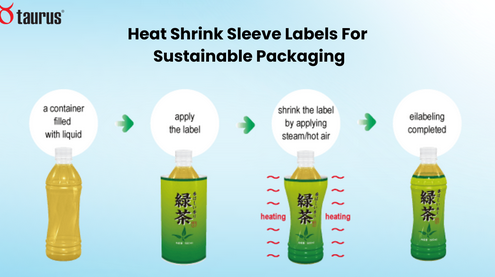
Transitioning to eco-friendly shrink sleeves requires a methodical approach that looks at the entire packaging ecosystem. Simply choosing a recycled film is only one part of the equation; successful implementation hinges on film-to-container compatibility, proper application, and clear messaging. Businesses must first assess their existing packaging lines to ensure the new materials can be processed efficiently.
A lower specific gravity, for instance, ensures the label floats during the recycling wash. By considering these technical details upfront, brands can avoid costly errors and maximize the environmental benefits of their chosen packaging. Working closely with industry leaders like Taurus Packaging provides the necessary technical guidance to navigate these complex specifications and integrate these greener solutions seamlessly into existing workflows.
Choosing Reputable Shrink Sleeve Suppliers
The success of a sustainable labeling project relies heavily on the expertise and commitment of the chosen partner. Reputable shrink sleeve suppliers do more than just print labels; they act as consultants, guiding brands on material selection, ink choices, and adhesive compatibility to ensure maximum post-consumer recyclability. These suppliers should offer transparent data on the environmental performance of their materials and be able to provide certifications that validate their claims, such as meeting APR (Association of Plastic Recyclers) guidelines.
A supplier’s capacity for innovation, developing thinner films, improving ink systems, and integrating wash-off adhesives. This partnership approach ensures that the investment in eco-friendly heat shrink sleeve labels translates into tangible, verifiable sustainability wins for the brand.
Beyond the Label: Assessing the Full Life Cycle Impact
True sustainable packaging goes beyond the material choice and extends to every step of the label’s life cycle, including printing and disposal. The inks used to decorate heat shrink sleeve labels must also be considered, with preference given to water-based, solvent-free, or UV-cured inks that minimize volatile organic compound emissions and do not bleed into the recycling wash water, which would also contaminate the plastic flakes.
Furthermore, the entire logistics of production, including waste reduction in the manufacturing process, should be scrutinized. Companies aiming for true leadership in sustainability are looking at ways to reduce the gauge, or thickness, of the film while maintaining performance, thereby reducing material use. By taking a holistic approach that evaluates materials, inks, adhesives, and manufacturing waste, a brand can claim genuine leadership in sustainable packaging.
Conclusion
In conclusion, the journey toward sustainable packaging is multifaceted, but using eco-friendly shrink sleeve labels represents one of the most visible and impactful steps a brand can take. By prioritizing materials with low specific gravity, embracing advanced wash-off adhesive technology, and choosing knowledgeable shrink sleeve suppliers as partners, companies can ensure their commitment to the planet is visible, verifiable, and ultimately successful in the recycling stream.